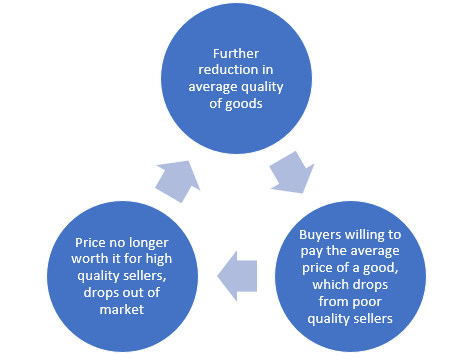
Adverse selection occurs when one party has more information than the other
Adverse selection
Adverse selection occurs when one party has more information than the other
Adverse selection arises from asymmetric information in markets, leading to unfair advantages for one party. This imbalance can cause the uninformed party to avoid transactions or demand skewed prices, ultimately harming market efficiency. Asymmetric information distorts the market's ability to reflect true value and quality.
Example
In the used car market, sellers may hide defects, leading buyers to fear unfair deals and withdraw from the market.
Understanding adverse selection helps in designing mechanisms to mitigate information asymmetry and promote fairer market transactions.
Related concepts
Moral hazard
Moral hazard occurs when an economic actor takes on more risk because it won't bear the full costs
Systematic
Systematic risk affects the entire market
Recency bias
Recency bias overvalues recent events in decision-making
Treynor ratio
Treynor ratio measures excess return per unit of systematic risk
Endowment effect
People value owned items more than unowned ones
Risk parity
Risk parity allocates based on risk contribution, not capital allocation
Educational content, not financial advice.
One email a day: 5 concepts + the 5 stories that matter →
Swipe through 100 ML concepts daily
Open TickerNews