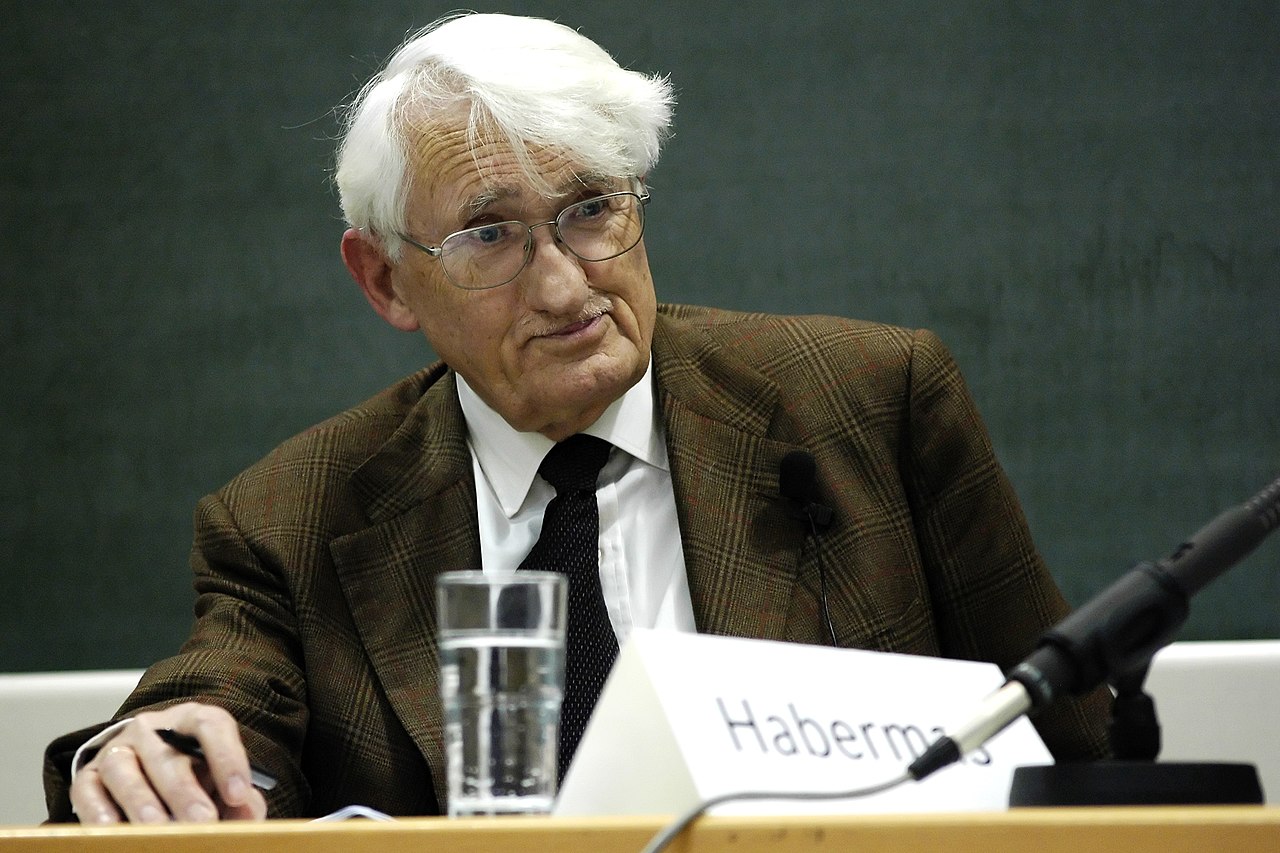
Communicative rationality aims for mutual understanding, not domination
Communicative rationality
Communicative rationality aims for mutual understanding, not domination
Communicative rationality, as defined by Jürgen Habermas, emphasizes the importance of achieving mutual understanding through communication. This theory posits that human rationality emerges from successful communication, which is inherently oriented toward mutual understanding rather than domination.
Example
In a debate, participants aim to reach a consensus by engaging in rational discourse, ensuring that both sides understand each other's perspectives and arguments.
Understanding communicative rationality is crucial for fostering constructive dialogue and avoiding manipulative or coercive communication.
Related concepts
Jürgen Habermas
Jürgen Habermas was a German philosopher and social theorist
Michel Foucault
Foucault's theories link power, knowledge, and social control
The Crisis of European Sciences and Transcendental Phenomenology
Husserl's crisis argued that positivism neglected the lifeworld's meaning-giving role
Two Dogmas of Empiricism
Quine's essay attacked two central aspects of logical positivism
Emmanuel Levinas
Levinas argues that ethics precedes knowledge
Deleuze and Guattari mean by 'deterritorialization'
Deterritorialization: dismantling rigid structures to foster creative, fluid identities and thought
One email a day: 5 concepts + the 5 stories that matter →
Swipe through 100 ML concepts daily
Open TickerNews