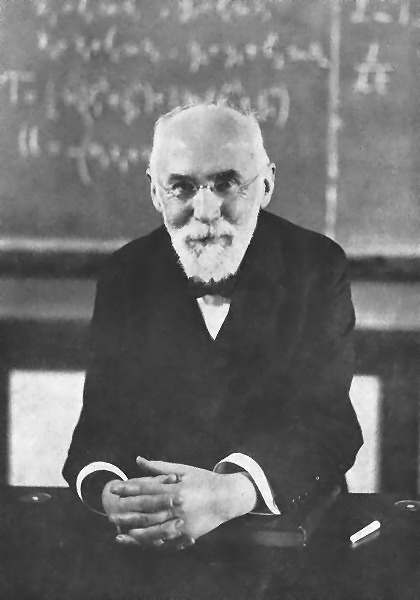
Lorentz transformations relate space and time coordinates between two inertial frames
Lorentz transformation
Lorentz transformations relate space and time coordinates between two inertial frames
The Lorentz transformations are a set of equations that connect the space and time coordinates of two different inertial frames moving at a constant velocity relative to each other. These transformations are essential for understanding how measurements of time and space differ for observers in motion relative to one another.
The transformations are named after Hendrik Lorentz, a Dutch physicist who contributed significantly to the development of these equations. They consist of six parameters, making them a complex family of linear transformations. The most common form of the transformation is parametrized by the velocity v in the x-direction.
The Lorentz transformation equation for time is expressed as t' = γ(t - vx/c²), where γ is the Lorentz factor defined as 1/sqrt(1 - v²/c²). This equation shows how time coordinates change between the two frames, highlighting the relativity of time.
Example
Consider two inertial frames, S and S', where S' moves at a velocity v relative to S along the x-axis. If a clock in frame S reads t = 10 seconds and is located at x = 300 meters, we can use the Lorentz transformation to find the corresponding time t' in frame S'. Assuming v = 0.6c, we first calculate γ = 1/sqrt(1 - (0.6c)²/c²) = 1/sqrt(1 - 0.36) = 1/sqrt(0.64) = 1/0.8 = 1.25. Then, t' = 1.25(10 - 0.6c * 300/c²) = 1.25(10 - 180/c) = 1.25(10 - 180/300) = 1.25(10 - 0.6) = 1.25 * 9.4 = 11.75 seconds.
Understanding Lorentz transformations is crucial for accurately describing the behavior of objects moving at high velocities, as predicted by the theory of relativity. This knowledge is fundamental in fields such as particle physics and cosmology.
Related concepts
Relativity of simultaneity
Simultaneity depends on the observer's motion
Symmetry (physics)
Symmetry leads to energy conservation
Einstein field equations
Einstein field equations relate spacetime curvature to energy-momentum tensor
Kerr metric
Kerr metric describes rotating black hole spacetime
Special relativity
Albert Einstein's special relativity paper introduced time dilation
Error analysis for the Global Positioning System
GPS satellites must correct for relativistic effects to avoid 10 km/day position drift
One email a day: 5 concepts + the 5 stories that matter →
Swipe through 100 ML concepts daily
Open TickerNews