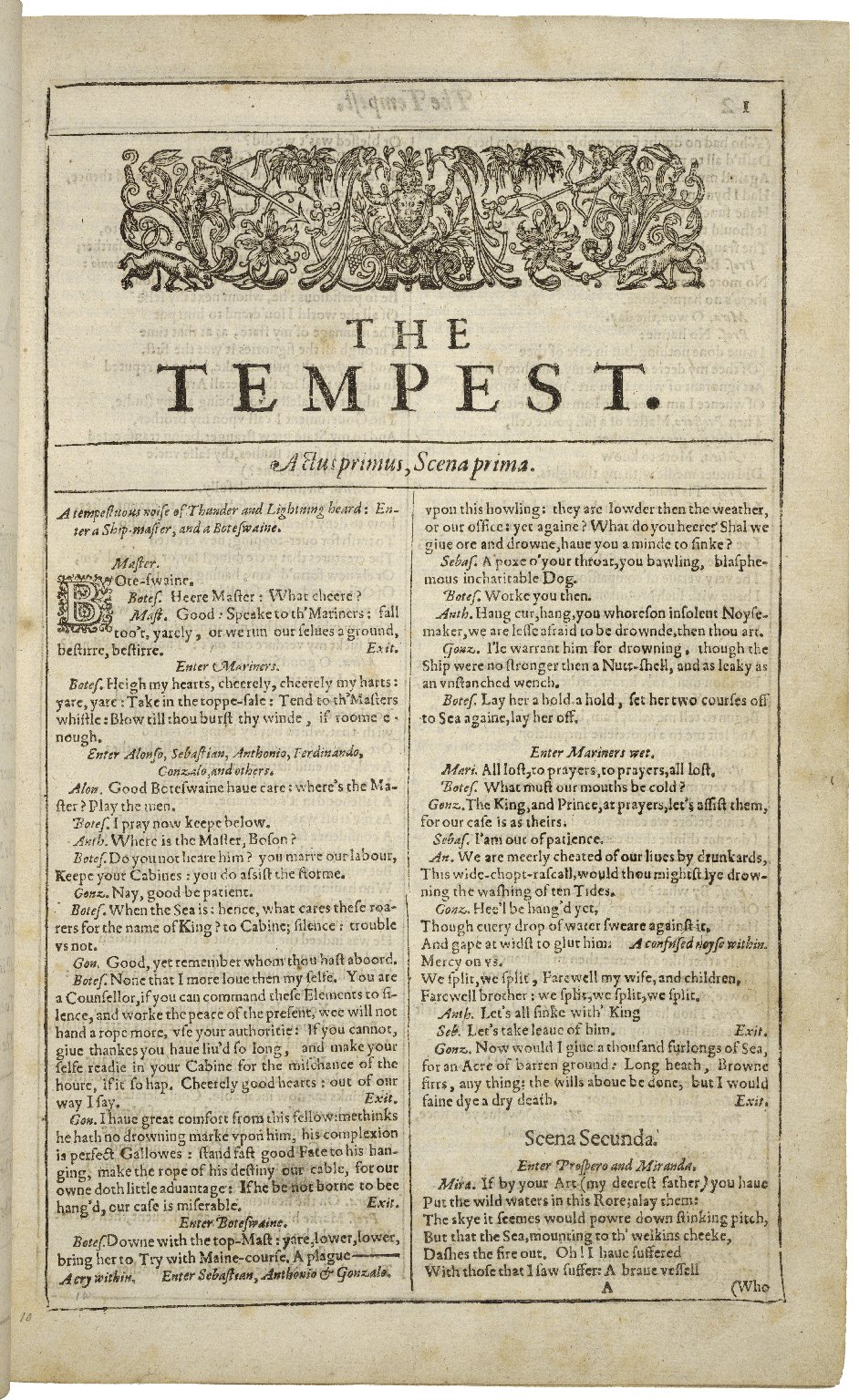
Prospero's renunciation of magic signals Shakespeare's farewell to the stage
The Tempest
Prospero's renunciation of magic signals Shakespeare's farewell to the stage
Modern criticism has categorized The Tempest as a late romance, a genre that blends tragic and comic elements. Prospero's farewell scene encapsulates this blend, as it combines the tragic elements of betrayal and revenge with the comic relief of forgiveness and reconciliation. This scene serves as a fitting conclusion to Shakespeare's exploration of these themes.
Understanding Prospero's farewell helps readers grasp Shakespeare's final thoughts on magic, human relationships, and the genre of late romance.
Related concepts
King Lear strips away
King Lear strips away power, identity, sanity — until only bare humanity remains on the heath
Proust's madeleine scene in In Search of Lost Time demonstrates
Proust's madeleine scene exemplifies involuntary memory triggered by taste
Faust
Faust exchanges his soul for knowledge and pleasure
Soliloquy
Macbeth's soliloquy reveals the futility of life
Hamlet
Hamlet is Shakespeare's longest play
Beckett's Endgame depicts
Endgame: A dying world where ending is impossible
One email a day: 5 concepts + the 5 stories that matter →
Swipe through 100 ML concepts daily
Open TickerNews