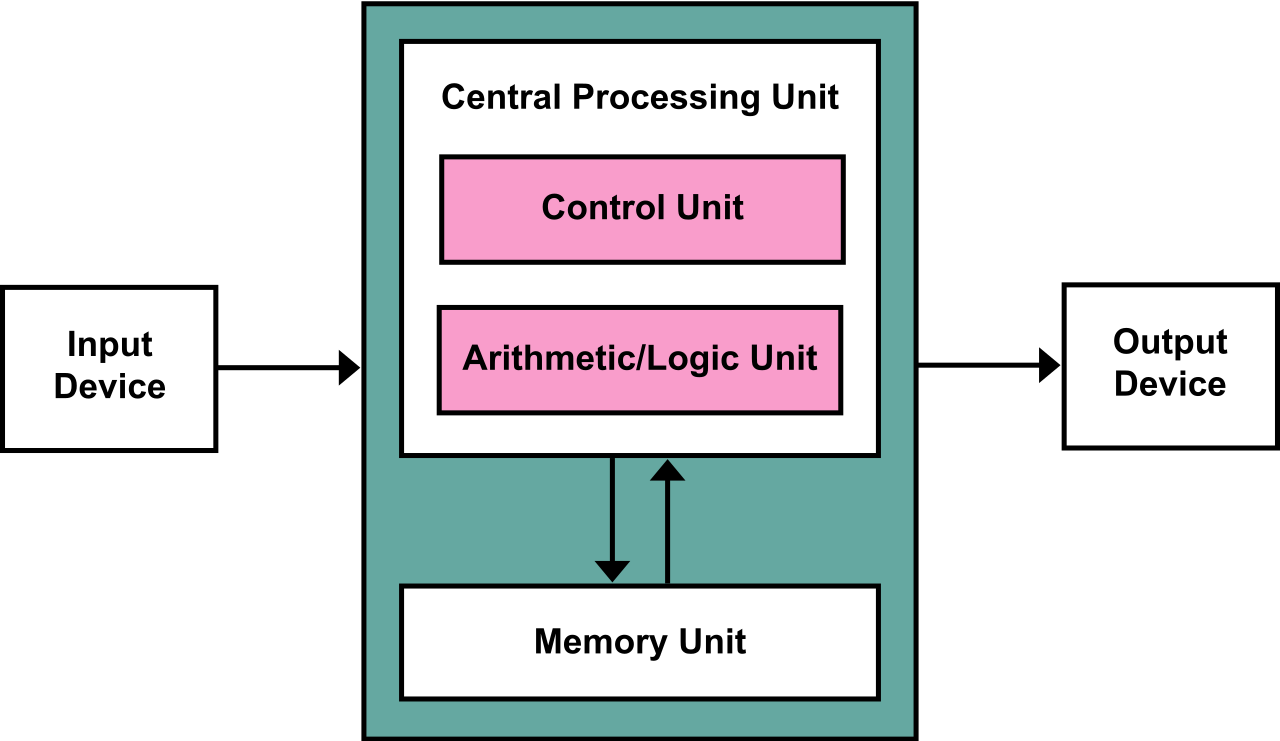
CPU must fetch both data and instructions from memory
Von Neumann architecture
CPU must fetch both data and instructions from memory
The von Neumann architecture requires the CPU to retrieve both data and instructions from memory, leading to a bottleneck known as the von Neumann bottleneck.
The von Neumann bottleneck occurs because the CPU must fetch both data and instructions from memory, which can slow down processing speed as the CPU waits for data to be transferred.
This bottleneck can limit the overall performance of a computer system, as the CPU cannot execute instructions as fast as it could if it had direct access to both data and instructions.
Example
In a computer running the von Neumann architecture, when the CPU needs to execute an instruction, it must first fetch the instruction from memory, then fetch the corresponding data from memory before it can execute the instruction.
Understanding the von Neumann bottleneck is crucial for optimizing computer performance and designing more efficient architectures.
Related concepts
kernel fusion reduces memory bandwidth bottleneck
Kernel fusion reduces memory bandwidth bottleneck by combining multiple operations into a single kernel, minimizing data transfers
Delay-line memory
CPU speed grows faster than memory speed
Triton auto-tunes BLOCK_SIZE: different sizes optimize for different hardware
Triton auto-tunes BLOCK_SIZE for hardware efficiency, optimizing memory access patterns and computational throughput
CPU cache
L1/L2 cache hierarchy reduces global memory latency
Overdrawn at the Memory Bank
Overdrawn at the Memory Bank was shot on videotape due to budget constraints
load balancing loss is needed in MoE
Load balancing loss in MoE prevents expert collapse by distributing workload evenly across experts
One email a day: 5 concepts + the 5 stories that matter →
Swipe through 100 ML concepts daily
Open TickerNews