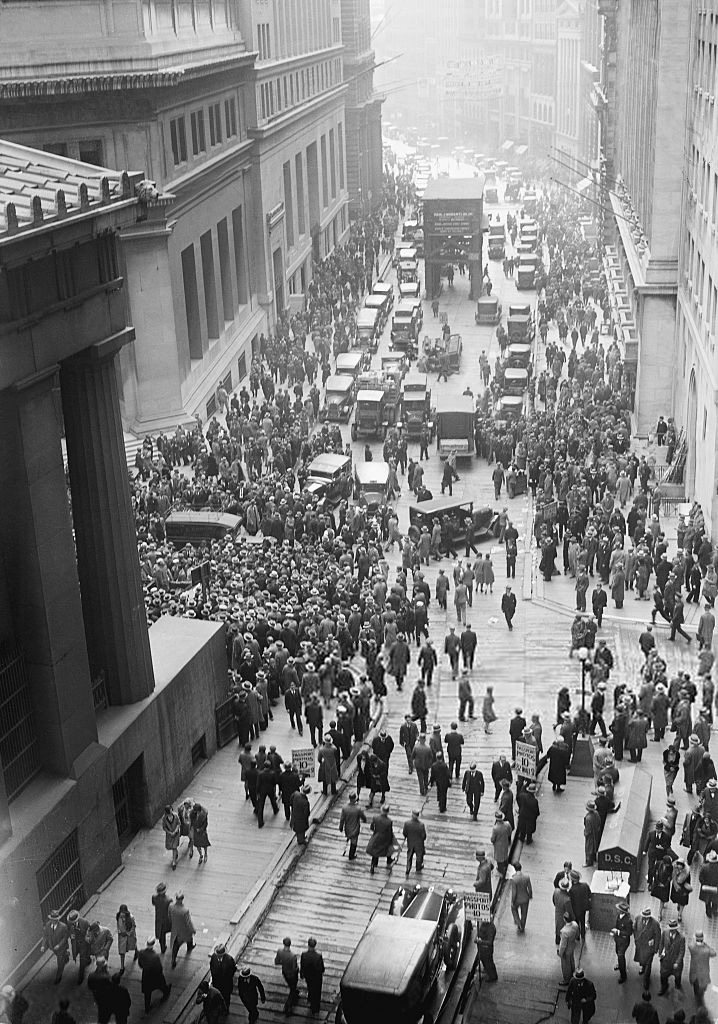
Wall Street crash of 1929 triggered the Great Depression
Wall Street crash of 1929
Wall Street crash of 1929 triggered the Great Depression
The Wall Street crash of 1929, also known as the Great Crash, was a major stock market crash in the United States that began in October 1929. It triggered a rapid erosion of confidence in the U.S. banking system and marked what would later cascade into the worldwide Great Depression that lasted until the United States entered into World War II on December 8, 1941, making it the most devastating crash in the country's history.
Speculation on margin was a significant factor contributing to the crash. Many members of the public, disappointed by the low interest rates offered on their bank deposits, committed their relatively small sums to stockbrokers. By 1929, the U.S. economy was showing signs of trouble; the agricultural sector was depressed due to overproduction and falling prices, forcing many farmers to sell their stocks to pay off debts.
Overvalued stocks also played a crucial role in the crash. The "Roaring Twenties" of the previous decade had been a time of industrial expansion in the U.S., and much of the profit had been invested in speculation, including in stocks. The rapid decline in stock prices on the New York Stock Exchange (NYSE) triggered widespread panic and selling, leading to the crash.
Understanding the causes of the 1929 stock market crash is essential to comprehending the economic factors that led to the Great Depression, which had profound impacts on global economies and societies.
Related concepts
2008 financial crisis
Financial crisis triggered by subprime mortgages and derivatives
South Sea Company
South Sea Bubble peaked in 1720, then collapsed
Herd behavior
Herd behavior leads to market bubbles and crashes
2010 flash crash
Flash crash lasted 36 minutes
Bankruptcy of Lehman Brothers
The largest bankruptcy filing in U.S. history involved over US$600 billion in assets
the disposition effect causes
Disposition effect: Investors sell winners prematurely and hold losers excessively
Educational content, not financial advice.
One email a day: 5 concepts + the 5 stories that matter →
Swipe through 100 ML concepts daily
Open TickerNews