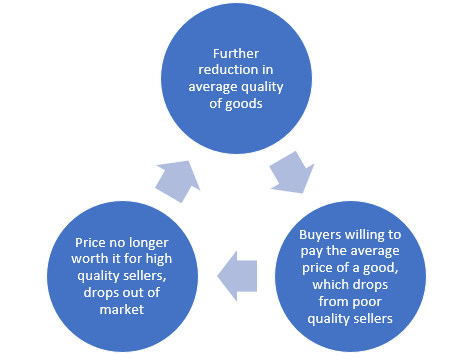
Adverse selection: High-risk individuals disproportionately purchase insurance
What adverse selection is — bad risks are more likely to seek insurance than good risks
Adverse selection: High-risk individuals disproportionately purchase insurance
Related concepts
What moral hazard causes — people take more risk when they don't bear the full consequences
Moral hazard: Insurance coverage leads to riskier behavior due to reduced personal consequences
What Buffett means by 'Only when the tide goes out do you discover who's been swimming naked'
Exposes investors' lack of prudent risk management
What recency bias does — overweighting recent events in investment decisions
Recency bias leads investors to prioritize recent market trends over long-term historical data
What arbitrage pricing theory (APT) differs from CAPM — allows multiple systematic risk factors
APT considers multiple risk factors, unlike CAPM's single market risk factor
What anchoring does in investing — the purchase price biases your sell decision
Anchoring bias causes investors to base sell decisions on initial purchase price rather than current market value
What the disposition effect causes — investors sell winners too early and hold losers too long
The disposition effect leads to premature selling of profitable investments and delayed selling of underperforming ones
Educational content, not financial advice.
One email a day: 5 concepts + the 5 stories that matter →
Swipe through 100 ML concepts daily
Open TickerNews