The strong CP problem questions why CP violation isn't observed in Quantum Chromodynamics despite theoretical possibility
What the strong CP problem is — why does QCD not violate CP symmetry when it has no reason not to
The strong CP problem questions why CP violation isn't observed in Quantum Chromodynamics despite theoretical possibility
Related concepts
What CP violation means — charge-parity symmetry is broken in weak interactions, explaining matter-antimatter asymmetry
CP violation allows for matter dominance over antimatter in the universe
What CPT symmetry is — the combination of charge, parity, and time reversal is always conserved
CP-symmetry implies charge, parity, and time reversal conservation
What QCD (quantum chromodynamics) describes — the strong force between quarks mediated by gluons
QCD describes the strong force interactions between quarks via gluon exchange
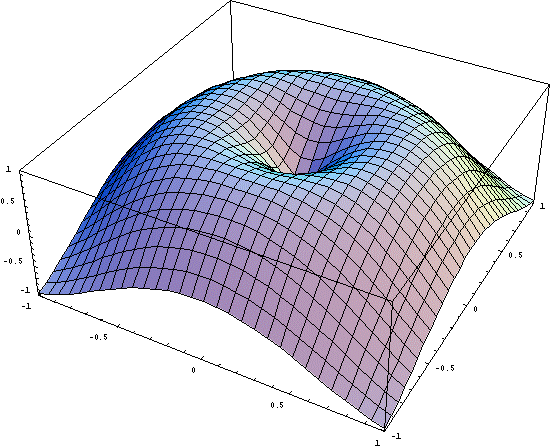
What spontaneous symmetry breaking does — the vacuum state breaks a symmetry that the laws possess
Vacuum state in quantum field theory breaks global U(1) gauge symmetry
How does the concept of quark confinement in quantum chromodynamics support the idea that free quarks have never been observed due to the presence of a color force, which causes them to be bound within hadrons?
Quark confinement in QCD implies unobserved free quarks due to color force binding them in hadrons
What the Goldstone theorem says — every spontaneously broken continuous symmetry produces a massless boson
Goldstone theorem: Spontaneously broken continuous symmetries yield massless Goldstone bosons
One email a day: 5 concepts + the 5 stories that matter →
Swipe through 100 ML concepts daily
Open TickerNews