Dead Souls satirizes 19th-century Russian bureaucracy
Dead Souls
Dead Souls satirizes 19th-century Russian bureaucracy
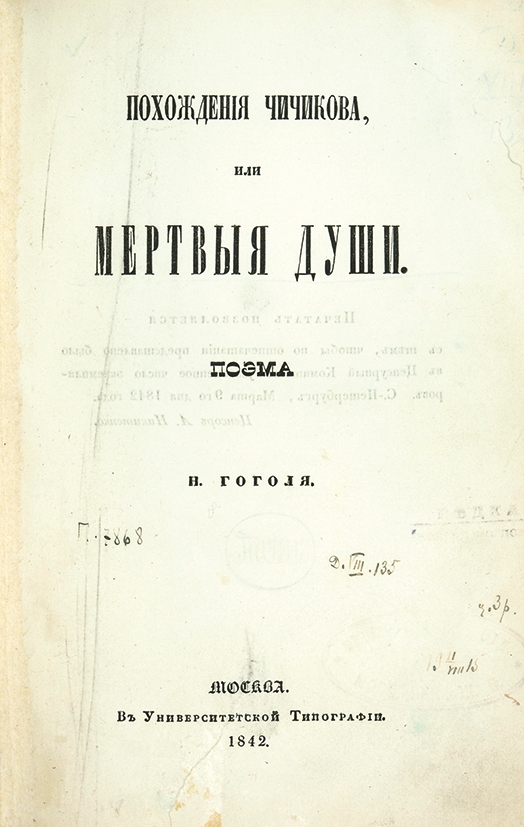
The novel Dead Souls, first published in 1842, is considered an exemplar of 19th-century Russian literature. Gogol himself saw his work as an "epic poem in prose," characterizing it as a "poem in prose." Modern editions of Dead Souls include what survives from Part Two, as reconstructed by editors from Gogol's notebooks.
Example
The character Pavel Ivanovich Chichikov's journey exposes the absurdity of the Russian bureaucracy through his interactions with various people.
Understanding the satirical nature of Dead Souls helps readers appreciate Gogol's critique of Russian society and bureaucracy during his time.
Related concepts
The Master and Margarita
The Master and Margarita satirizes Russian bureaucracy and atheism
Crime and Punishment
Raskolnikov plans to kill an unscrupulous pawnbroker to liberate himself from poverty
Demons (Dostoevsky novel)
"Demons" was Dostoevsky's response to the rise of nihilism in 1860s Russia
Ivan the Terrible (1945 film)
Solzhenitsyn's novel exposed the brutal reality of the Soviet gulag system
Russian formalism
Russian Formalism introduced 'defamiliarization' (ostranenie)
Fyodor Dostoevsky
Dostoevsky's exploration of the 'Russian soul' through suffering and spiritual redemption
One email a day: 5 concepts + the 5 stories that matter →
Swipe through 100 ML concepts daily
Open TickerNews