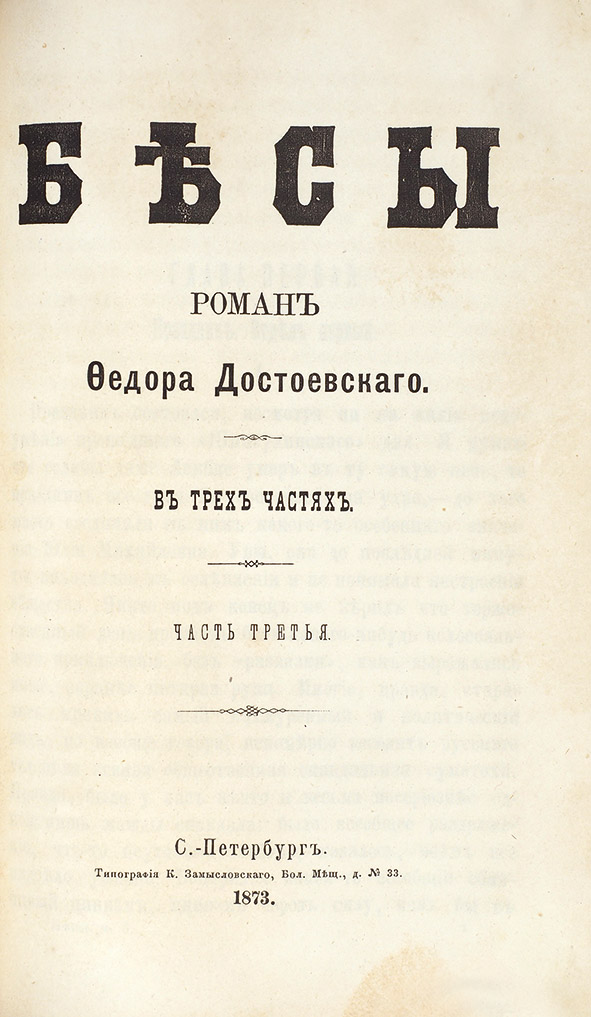
"Demons" was Dostoevsky's response to the rise of nihilism in 1860s Russia
Demons (Dostoevsky novel)
"Demons" was Dostoevsky's response to the rise of nihilism in 1860s Russia
"Demons" is considered one of Dostoevsky's masterworks, reflecting his literary prowess and thematic depth. The novel serves as a social and political satire, capturing the essence of the radical ideology that threatened Russian society at the time. Joyce Carol Oates describes it as Dostoevsky's most tragic work, highlighting its emotional and psychological impact.
Ronald Hingley regards "Demons" as Dostoevsky's greatest assault on Nihilism, emphasizing its significance in the literary world. The novel's portrayal of a fictional town descending into chaos underlines the catastrophic potential of nihilism. The story revolves around master conspirator Pyotr Verkhovensky and the mysterious Stavrogin, illustrating the destructive power of radical ideologies.
Understanding "Demons" provides insight into Dostoevsky's critique of nihilism and its societal implications. The novel remains a profound literary achievement that continues to resonate with readers due to its exploration of moral and political themes.
Related concepts
Fyodor Dostoevsky
Dostoevsky's exploration of the 'Russian soul' through suffering and spiritual redemption
Crime and Punishment
Raskolnikov plans to kill an unscrupulous pawnbroker to liberate himself from poverty
Fathers and Sons (novel)
Ivan Turgenev's novel "Fathers and Sons" introduced the concept of nihilism through the character Bazarov
The Master and Margarita
The Master and Margarita satirizes Russian bureaucracy and atheism
Dead Souls
Dead Souls satirizes 19th-century Russian bureaucracy
The Metamorphosis
Kafka's novella "The Metamorphosis" was first published in 1915
One email a day: 5 concepts + the 5 stories that matter →
Swipe through 100 ML concepts daily
Open TickerNews